


- Admin
- Jan 26, 2026
- Supporting Local Residents
Achieving Self-Sufficiency Through Small Project Funding
Relief organizations in Idlib are moving away from providing food baskets—but has this new approach been successful?
Relief organizations have started funding local residents to launch small projects. This represents a shift in aid culture away from simply distributing food baskets. Relief workers say it is an attempt to create self-sufficiency and help these communities withstand the impact of the war. Our correspondent in Idlib reports on these initiatives and questions: Are these programs successful?
Mohammad Abu Adnan, a 38-year-old construction worker, lost his arm when a warplane targeted his city, Ariha, in northern Idlib on September 1, 2015. Mohammad was injured while buying supplies from the local market and has been unable to work since. Shortly after his injury, he became dependent on food aid provided by humanitarian organizations.
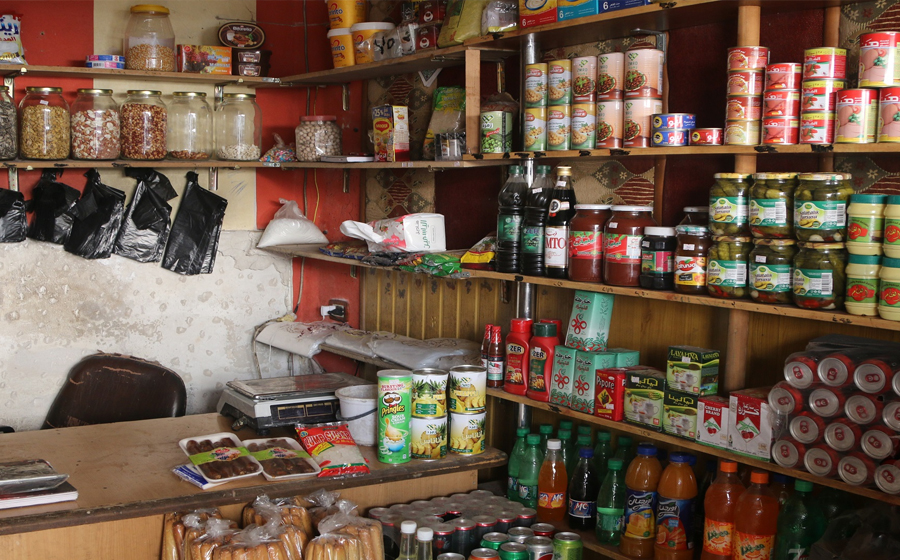
Several humanitarian organizations announced new programs aimed at supporting the launch of small business projects to help local residents achieve a sustainable income. Abu Adnan registered with the Ariha City Council to receive support for his small project. He was accepted into the “Good Livelihood” program, run by the Sham Humanitarian Foundation. He chose to open a shop selling cheese and dairy products, with funding of $2,000 provided by the foundation.
Supporting small projects is part of a new strategy adopted by humanitarian organizations operating in opposition-controlled northern Syria. Instead of distributing food baskets, organizations provide opportunities to fund developmental projects for those in need, allowing them to earn a living without relying on aid.
Idlib is the last governorate remaining under Syrian opposition control. Its population was 1.5 million before 2011. Today, the United Nations estimates about 3 million people live in Idlib. Many Syrians from other areas were forcibly displaced to Idlib during the past few years of conflict. A large number of current residents come from Aleppo, Eastern Ghouta, Homs, Daraa, and other areas that were once under opposition control but later fell to the regime. Many were relocated to Idlib as part of agreements with the regime, including children and widows who support their families alone.
Many humanitarian organizations have implemented programs to support small projects in Idlib, aiming to create self-sufficiency for beneficiaries. This support often includes distributing cows, sheep, or chickens to small farmers, funding retail shops, or helping establish manufacturing workshops such as carpentry or clothing production. These programs also focused on supporting people with special needs, enabling them to rely on themselves and secure their daily livelihood.
Families planning to start their own projects can apply for support, with funding ranging between $1,500 and $2,000 per project. Accepted applicants also receive logistical support, such as providing animal feed for farmers or short-term monthly payments for newly opened shops.
These projects have succeeded for some beneficiaries, whose businesses have flourished. However, others have failed, forcing them to sell their projects after a few months, and they did not consider this aid shift a success.
We met Mohammad Abu Adnan at his shop in Ariha. He is a young man with a long beard, wearing a simple black shirt. He told Syria Untold: “I suffered from poverty and never had a steady income. My livelihood relied heavily on the generosity of people who provided my daily food. I used to receive monthly food baskets from the local council, but they were enough for only 15 days.”
Abu Adnan added: “I chose my own project, and after the program approved my application, I opened a shop selling dairy products as a start. Then I requested additional support from funders to buy a fridge and an electric generator. Step by step, I was able to develop the business, start stocking fruits, vegetables, and other food items. Eventually, the shop provided me with a dignified living.”
Share on